
Three Key Priorities for Norfolk

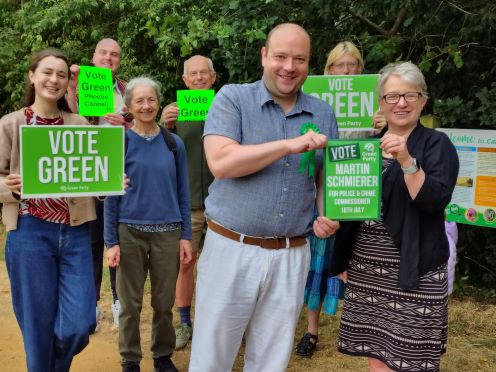
Today I was out in Catton (an area within Broadland District Council), talking to residents about my key priorities if elected on Thursday (16th July). I was delighted to be joined by Green Party member of the House of Lords, Natalie Bennett as well as members of the local party…
Priorities for Norfolk

The Green Party has consistently opposed Police and Crime Commissioners because we do not believe policing should be overseen by a single politician. The police must be held to account, but we believe that scrutiny is better exercised by a cross-party body that reflects the diversity of our communities. However, while this role exists, it matters who holds it.

If elected, my first priority will be rebuilding trust between Norfolk Constabulary and the communities it serves. I want residents to play a genuine role in shaping local policing priorities, ensuring every town, village and neighbourhood has a stronger voice in the decisions that affect them.

Secondly, I will champion innovative approaches such as a tri-service community safety model, bringing together policing, fire prevention and other public services to provide a more visible local presence while making better use of public resources.

Finally, I will be prepared to ask difficult questions about what really reduces crime. That means tackling the root causes of offending, investing in prevention and being willing to examine whether some of our laws, particularly around drugs, are still fit for purpose if we are serious about reducing harm and creating safer communities.

How to vote…

This election is likely to very close, with perhaps just a handful of votes deciding who wins. Given the Green Party’s very strong showing in the last local elections in May, there is every chance we could elect our first ever Police and Crime Commissioner here in Norfolk. Don’t leave this decision to others, because they might be relying on you.

Find your nearest polling station here. Polls open between 7am and 10pm on Thursday 16th July.
North Norfolk: An opportunity for change

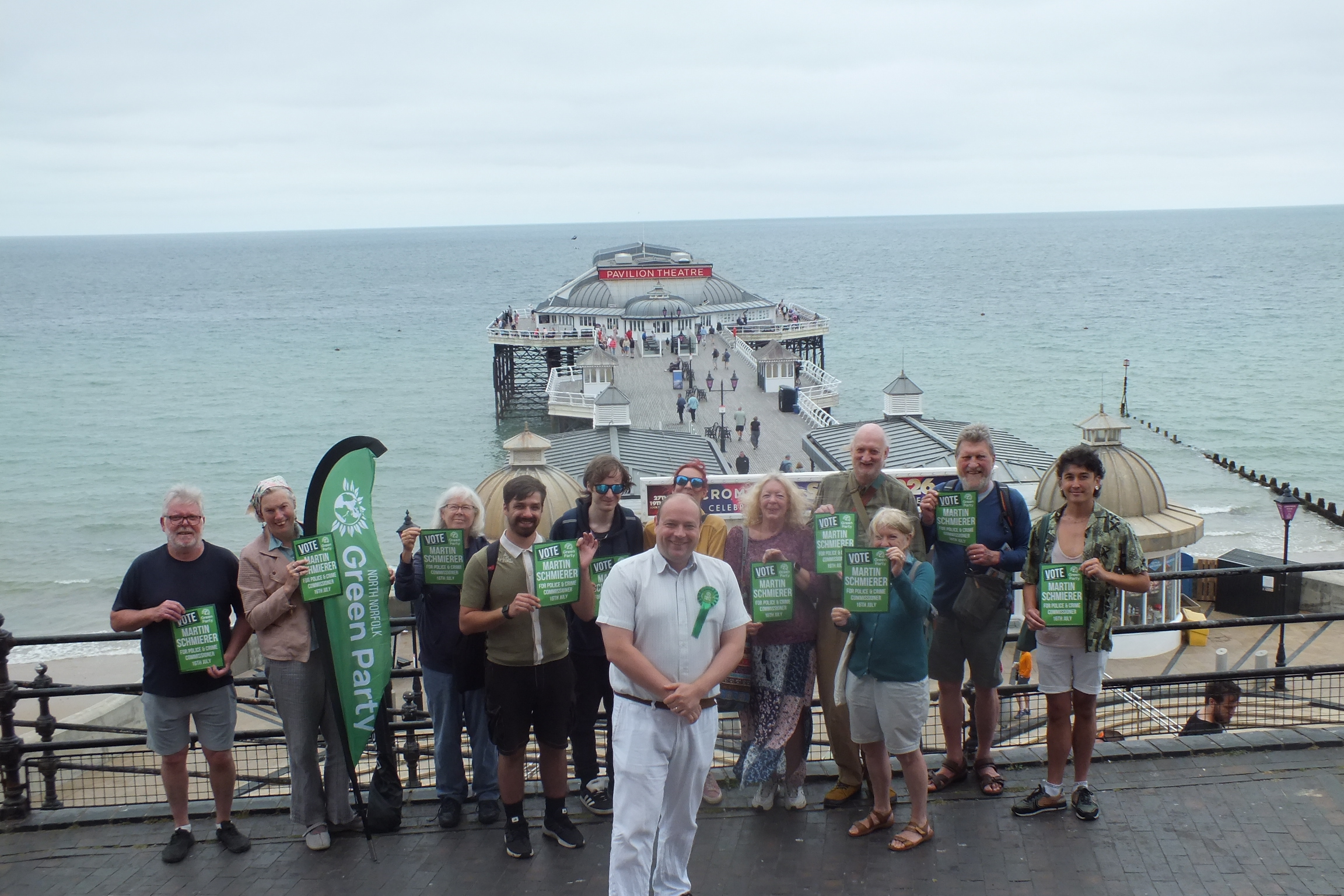
North Norfolk deserves a Police and Crime Commissioner who understands that strong communities are the foundation of effective policing. From the coast to the market towns and villages inland, people want to feel safe, listened to and confident that their concerns matter. That is the approach I will bring as Norfolk’s first (hopefully) Green Police and Crime Commissioner.

Find out where to vote on Thursday 16th July 2026 here

For too long, policing has become something that happens to communities rather than with them. I want to change that by putting local people back at the heart of decision-making. Whether it’s parish councils, community groups, local businesses, farmers or young people, everyone has a role to play in making North Norfolk an even safer place to live, work and visit.

As your PCC, I would champion visible neighbourhood policing, ensuring officers spend more time in our communities, building relationships and preventing crime before it happens.

Prevention is not a soft option; it is the smartest way to reduce crime, support victims and make the best use of limited police resources. That means investing in early intervention, tackling the root causes of offending, strengthening mental health support and working with schools, councils and voluntary organisations to stop problems escalating. These principles are central to my vision for policing across Norfolk.

The Green Party believes safer communities are created through partnership, not division. I will always stand up for victims of crime, support action against anti-social behaviour, rural crime and organised criminal gangs, while ensuring policing is fair, accountable and rooted in the communities it serves. I also believe we need the confidence to have honest conversations about what works, including adopting evidence-led approaches to reducing harm and breaking the cycle of offending.

This election is about more than choosing who oversees Norfolk Constabulary. It is an opportunity to choose a different style of leadership: one that listens before it speaks, brings people together instead of driving them apart, and believes that every town and every village in North Norfolk deserves to have its voice heard.

Together, we can build a county that is not only safer, but fairer, kinder and stronger because its communities are at the heart of policing.

A Connected Norfolk

When I think about Norfolk’s future, I don’t just think about policing. I think about the kind of county we want to be.

Indeed I love this county. My heart is always filled with happiness and pride when I read that road sign saying “Norfolk: Nelson’s County”. It is the county I have been proud to call my home since 1994 when my parents moved up here with me, when I was seven years old

We are fortunate to live in one of the most beautiful counties in the country. From our coastline and the Broads to our market towns, villages and the city of Norwich, Norfolk is a place where people care deeply about their communities. That pride is one of our greatest strengths.

The role of the Police and Crime Commissioner should be to help those communities flourish.

Crime cannot be prevented by policing alone. Strong communities are built through good schools, thriving high streets, opportunities for young people, effective public services and neighbours who know and support one another. The police are a vital part of that picture, but they are at their best when they work alongside the people they serve.

That’s not too say Norfolk doesn’t have its problems: Too great is the divide between rich and poor; too many struggle with loneliness and social isolation and the challenge of climate change is not a far off worry, it is a very real reality affecting our lives and those of our children and grandchildren. But there is an antidote to this and that is through strengthening the sense of community that already exists in our towns and city, our villages and meeting places.

My vision is of a connected Norfolk, where councils, the police, the NHS, charities, businesses and local residents work together to tackle problems before they become crises. It is a Norfolk where communities are listened to, where local knowledge shapes decisions, and where people feel confident that those in public office are working together in the public interest.

It is also a Norfolk that rejects those who seek to divide us. Our county has always been strongest when we focus on what we have in common rather than what sets us apart. Fear and division may win headlines, but they do not make communities safer. Respect, trust and cooperation do.

If I am elected as Norfolk’s Police and Crime Commissioner, I will bring people together rather than drive them apart. I will champion neighbourhood policing, prevention and partnership, and I will always put the interests of Norfolk ahead of party politics.

Together, we can build on everything that already makes Norfolk such a wonderful place to live, work and raise a family—and ensure it remains one of the safest counties in England for generations to come.

Preventing Violence and Reducing Harm

One of the greatest responsibilities of policing is not simply responding to crime, but helping to prevent it in the first place.

Norfolk is already one of the safest counties in England, and I want to keep it that way. The best way to do that is by recognising that violence has causes. By understanding those causes and intervening early, we can prevent more people becoming victims and reduce the demand on our police, courts and health services.

As Police and Crime Commissioner, I would establish a Norfolk Violence Reduction Unit, bringing together the police, schools, local councils, the NHS, youth services, charities and community organisations. Rather than each organisation tackling problems in isolation, they would work together to identify people at risk, support families and intervene before lives are damaged by violence.

I also believe it’s time for an honest conversation about drug policy. Decades of relying almost exclusively on criminal justice have not eliminated drug misuse, organised crime or drug-related deaths. Instead, too many vulnerable people become trapped in addiction while criminal gangs continue to profit.

I support moving towards an evidence-led public health approach, learning from countries such as Portugal, where treating drug dependency as a health issue has helped reduce addiction, HIV infections, drug-related deaths and reoffending. I also believe we should be willing to explore innovations such as professionally supervised drug consumption facilities where the evidence shows they can save lives, reduce public drug use and connect people with treatment and recovery services.

This is not about being soft on crime. Dealers who exploit vulnerable people should continue to face the full force of the law. But those struggling with addiction need pathways into recovery rather than a revolving door through the criminal justice system.

If we focus on reducing harm as well as enforcing the law, Norfolk can become an even safer, healthier county where fewer people become victims and more people are given the opportunity to rebuild their lives.

Protecting Local Accountability

The Police and Crime Commissioner is an important public office, but I don’t believe it should become an ever more powerful one, nor should it ever have become a political one.

Of course the work of the police need to be scrutinised and the Chief Constable needs some authority through which they are held to account, but that should not be the responsibility of one person and one political agenda.

The Green Party has consistently argued that policing works best when it is accountable to local communities rather than concentrated in the hands of a single politician. In the long term, we would like to see Police and Crime Commissioners replaced with stronger, genuinely cross-party Police and Crime Panels that reflect the diversity of the communities they serve.

While this role exists, however, I believe it should exercise its powers with humility and transparency.

That is why I oppose proposals to transfer responsibility for Norfolk Fire and Rescue Service to the Police and Crime Commissioner. Firefighters and police officers perform different roles, face different challenges and deserve governance arrangements that reflect those differences. Norfolk Fire and Rescue Service is already accountable through Norfolk County Council, and I see no compelling evidence that moving it under the PCC would improve services for residents.

Instead, I want to strengthen democratic oversight by working openly with councillors from every political party, the Police and Crime Panel and local communities. Good ideas don’t belong to one party, and neither should public safety.

For residents, this means decisions being made openly, scrutiny being welcomed rather than avoided, and local voices having genuine influence over the future of policing.

Public trust is earned through openness, accountability and collaboration. If elected, I would work with Norfolk’s communities—not simply speak on their behalf—and ensure that policing remains accountable to the people it serves.